


Saint Peter's Basilica: Where Art Became Power and Faith Became Politics
Discover the hidden meanings, political symbolism, and architectural masterpieces of Saint Peter's Basilica. Join our free guided tour to see what most visitors miss.
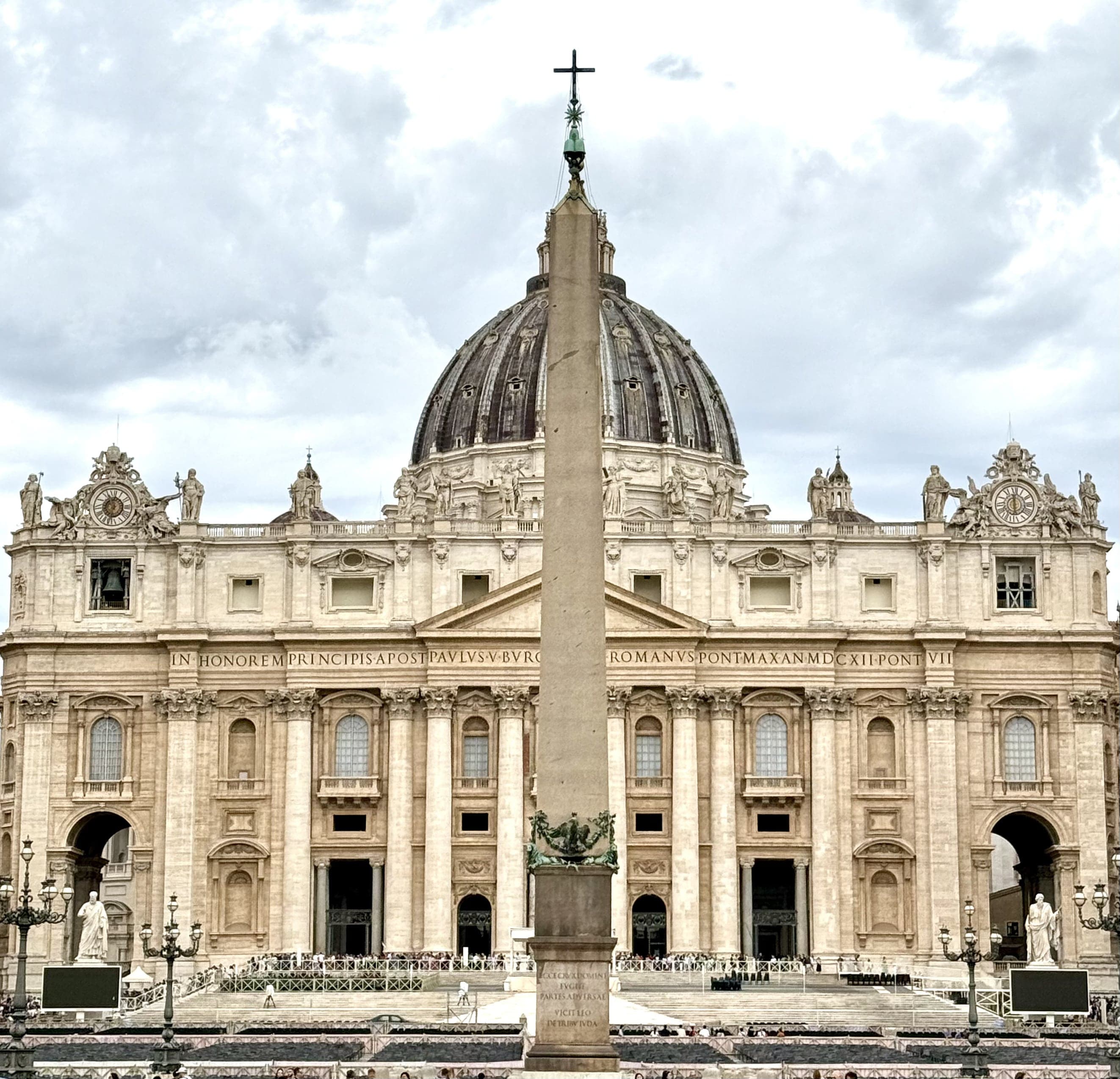
Saint Peter's Basilica isn't just a church - it's a calculated display of power wrapped in marble and gold. Every sculpture, every ray of light filtering through stained glass, every inch of gilded ceiling was designed with one purpose: to communicate that Rome, and the Catholic Church, ruled the world.
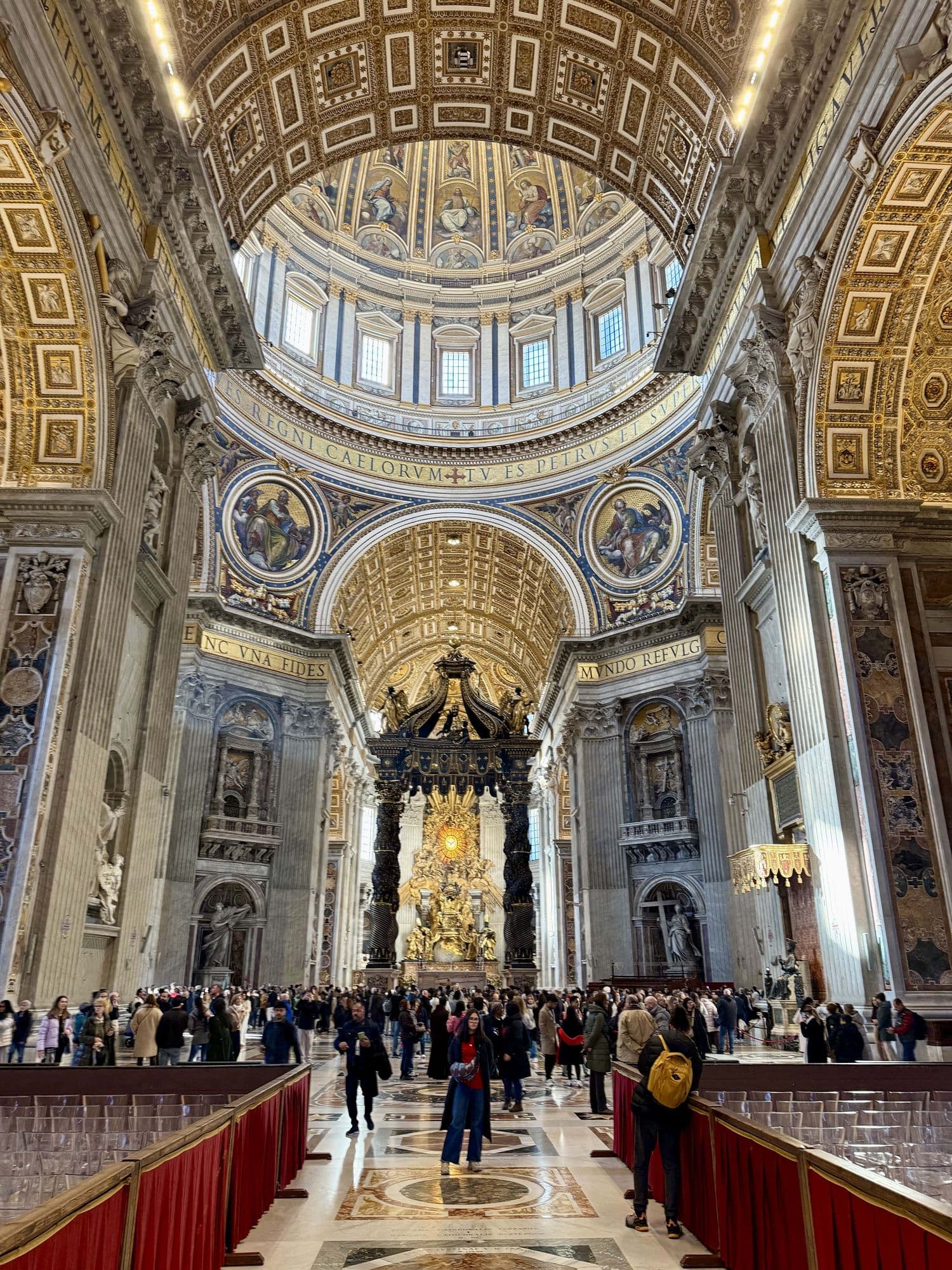
Nothing Here Is Accidental
Before you even enter, you're confronted with an Egyptian obelisk standing in the center of St. Peter's Square. Why? Because Rome wanted one. It was brought from Egypt in 37 AD, a trophy of conquest, repositioned in 1586 to declare: we take what we want, we move mountains, we bend ancient civilizations to our will. The basilica itself took 120 years to complete (1506-1626) and involved virtually every major Renaissance and Baroque artist. Bramante designed it. Michelangelo created the dome. Bernini crafted the square and the interior masterpieces. This wasn't architecture - it was propaganda on an unprecedented scale.
Michelangelo's Pietà: Beauty as Disarmament
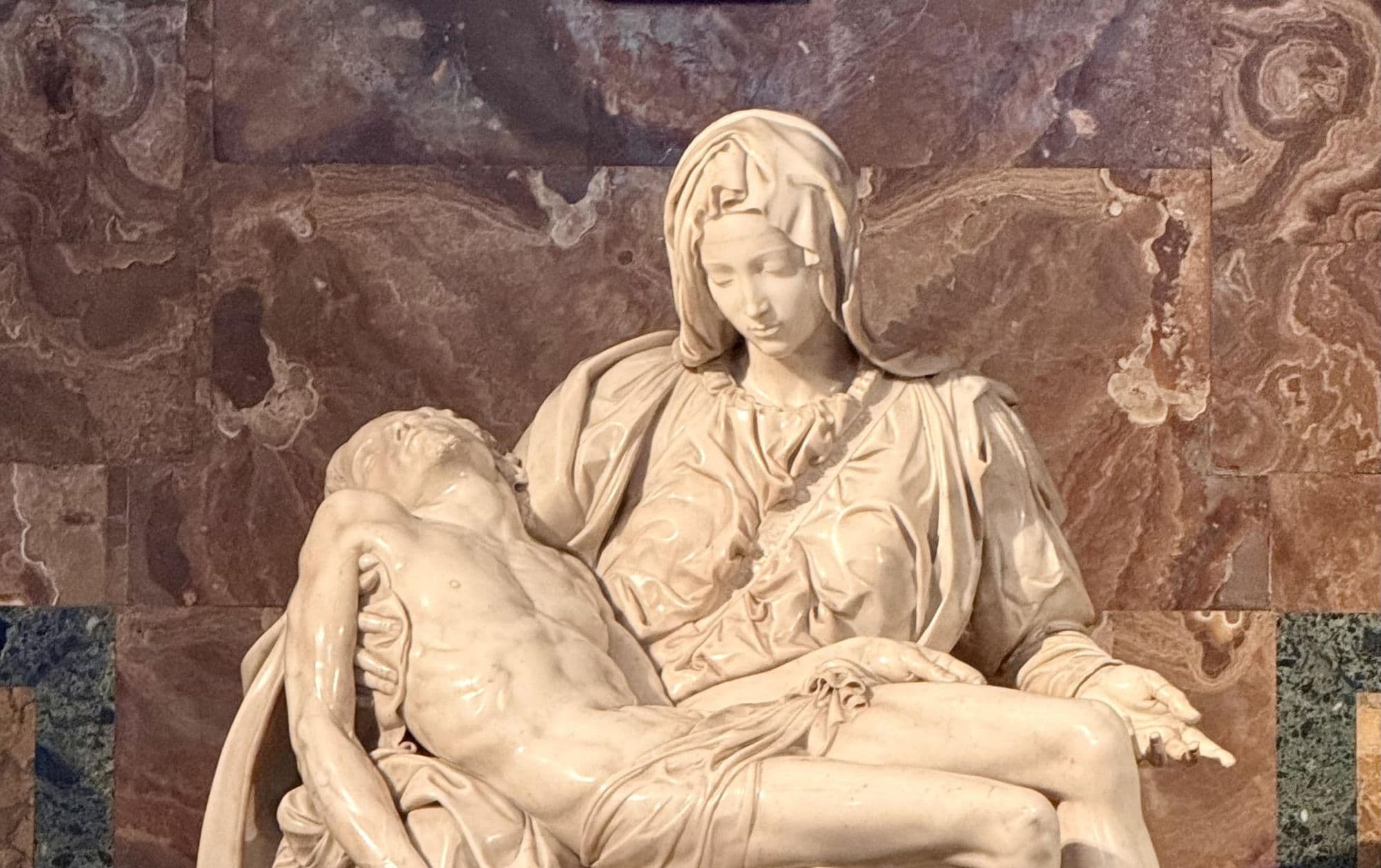
The first masterpiece you encounter is Michelangelo's Pietà, created when he was just 24 years old. It's the only work he ever signed - his name is carved into the sash across Mary's chest. But look closer. Mary appears younger than her son. Her face shows no age, no grief lines - she's serene, almost detached. This wasn't a mistake. It's theology carved in marble: Mary's purity and grace transcend human aging and suffering. The work disarms you with its beauty before you even realize you're receiving a theological lesson. Most visitors snap a photo through the protective glass and move on. They miss the revolutionary technique - the polished marble seems to glow from within, the fabric drapes with impossible realism, and Mary's expression captures something beyond human emotion. Our guides reveal these details and explain why Michelangelo made these specific artistic choices - decisions that sparked controversy and changed Renaissance art forever.
Bernini's Baldachin: Scale as Intimidation
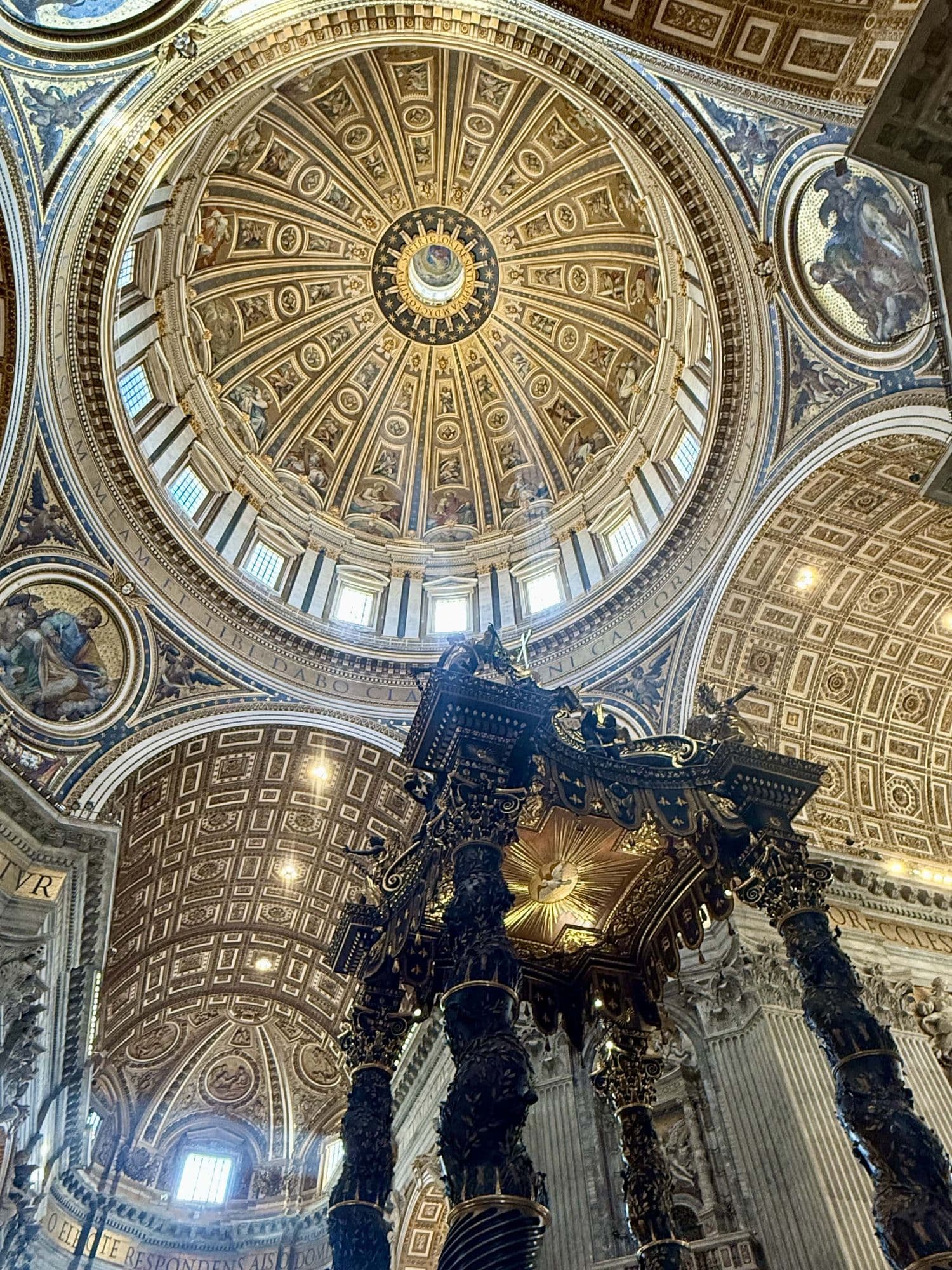
Walk down the central nave and you're confronted with Bernini's Baldachin - a bronze canopy standing 29 meters (95 feet) tall. To put that in perspective, it's taller than a 9-story building. Inside a building. The bronze was stripped from the Pantheon's ancient Roman roof. Pope Urban VIII ordered it melted down, prompting Romans to quip: 'What the barbarians didn't do, the Barberini did' (Barberini was the pope's family name). Every twisted column, every golden angel, every decorative element serves a purpose: to make you feel small. To remind you that you're standing at the center of Catholic power, directly above St. Peter's tomb, where the first pope was buried and where papal authority begins. Kings and emperors, including Charlemagne himself, knelt here for coronation. The scene was carefully choreographed - the overwhelming scale, the filtered light, the smell of incense - all designed to communicate one unambiguous message: crowns answer to Rome.
The Hidden Details Most Visitors Miss
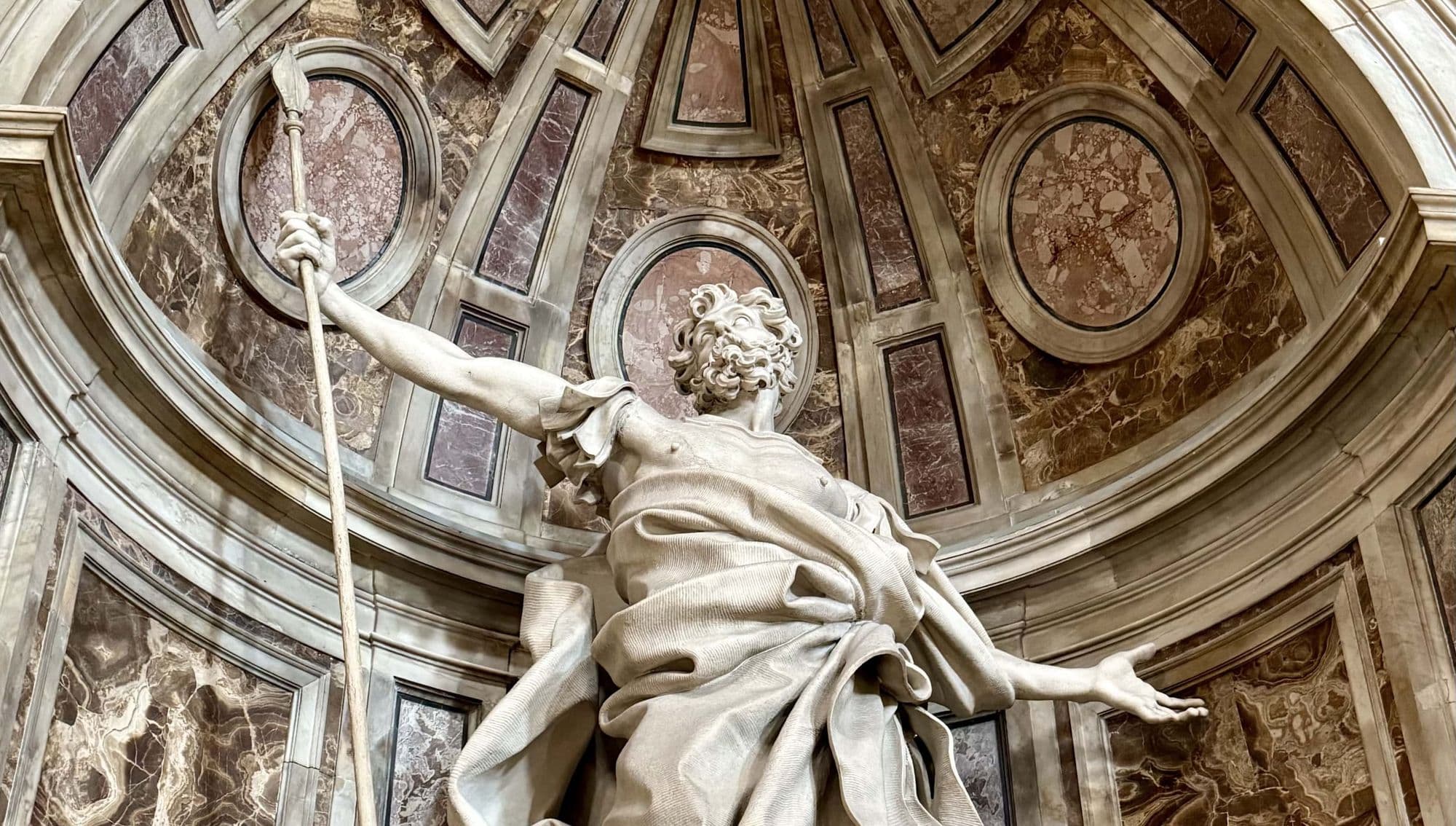
Saint Peter's is filled with symbols and details that reveal themselves only when you know where to look. This is exactly what our guided tour uncovers: The Papal Window: High above the entrance, this is where the pope appears to give blessings to crowds in St. Peter's Square. Your guide will point it out and explain its significance. The Loggia of Blessings: The balcony where 'Habemus Papam' is proclaimed when a new pope is elected. Cardinals step onto this balcony to announce: 'We have a pope.' You'll learn about the dramatic moments that happened here. The Chimney: During papal elections, a special chimney is installed. Black smoke means no decision; white smoke means a new pope has been chosen. The entire world watches this chimney - and you'll see exactly where it's positioned. The Holy Door: Opened only during Jubilee Years (every 25 years), pilgrims who walk through it receive special indulgences. The current door features panels depicting salvation history that our guides will decode. The Bronze Statue of St. Peter: Pilgrims touch or kiss the statue's foot, which has been worn smooth by centuries of devotion. The statue is actually much older than the basilica - it may date back to the 5th century.
Why You Need a Guide
Walking through Saint Peter's on your own means you'll see the obvious: the dome, the Pietà, the golden interior. But you'll miss the stories, the hidden symbolism, and the political calculations embedded in every artistic choice. Without a guide, you won't know: • Why certain saints are positioned in specific locations • What the mosaics really depict (hint: most aren't paintings) • How the architects manipulated light and space to create emotional responses • The construction scandals and artist rivalries that shaped the basilica • Which popes bankrupted the church to build this monument • The symbolic messages embedded in every corner These aren't minor details - they're the difference between seeing a beautiful building and understanding a 500-year project in visual persuasion.
What Our Free Tour Includes
Our Saint Peter's Basilica free tour is designed to reveal the layers most visitors never see: ✓ Expert local guides who bring the history to life ✓ Headsets included - hear every detail clearly even in the crowded basilica ✓ Basilica entrance fee covered - we handle the logistics ✓ Hidden details and symbols explained ✓ Stories of power, politics, and papal intrigue ✓ The best viewing spots for Michelangelo's Pietà and Bernini's masterpieces ✓ Context that transforms your visit from sightseeing to understanding Since we cover the basilica entrance fee and headset costs, we ask you to tip fairly based on your experience. Our guides work hard to make this more than just another tourist attraction.
Practical Tips for Your Visit
Dress Code: This is a sacred site. Shoulders and knees must be covered. Tank tops, shorts, and short skirts will result in denied entry. Security is strict. Security Lines: Expect airport-style security. Our tour times are strategically scheduled to minimize wait times, but arriving early is always recommended. Best Time to Visit: Our morning tours tend to be less crowded. Wednesday mornings are papal audience days - expect massive crowds if you visit independently. Photography: Allowed in the basilica, but be respectful. No flash photography.
What Makes This Tour Different
Our tour focuses specifically on Saint Peter's, giving it the attention it deserves. With headsets on and filters off, you'll experience the basilica not as a tourist attraction, but as what it truly is: a centuries-long project in visual persuasion, where art stops being art and starts doing politics. You'll leave understanding why this building terrified kings, bankrupted popes, and changed the course of Western civilization. Less innocence, more cool stuff.
Don't just visit Saint Peter's Basilica - understand it. Book your free guided tour and discover the hidden meanings and political power embedded in every corner!
Related Articles
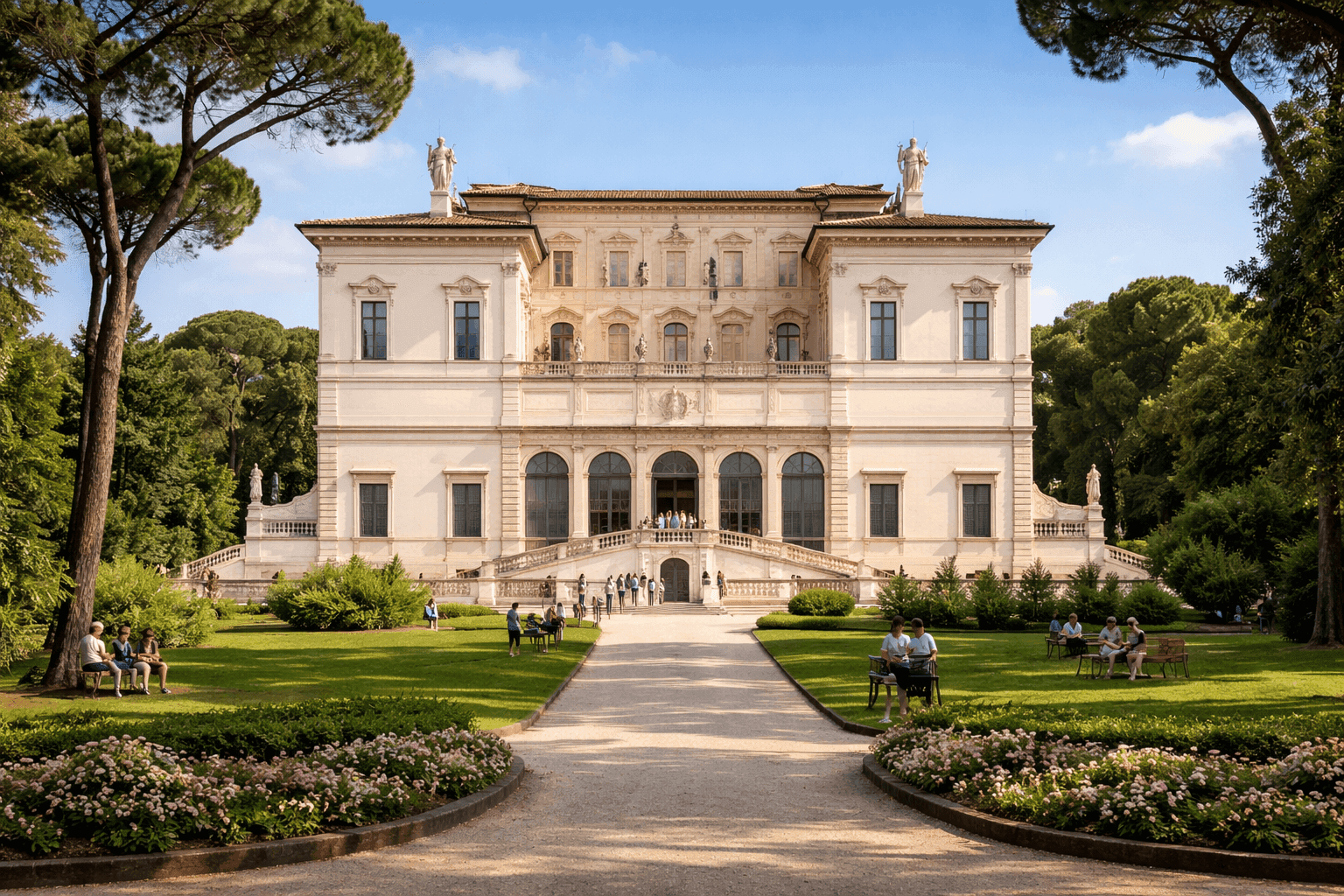
The History of Villa Borghese: From Cardinal Scipione to Now
How a cardinal's private pleasure garden, built on stolen art and papal money, became Rome's biggest public park.
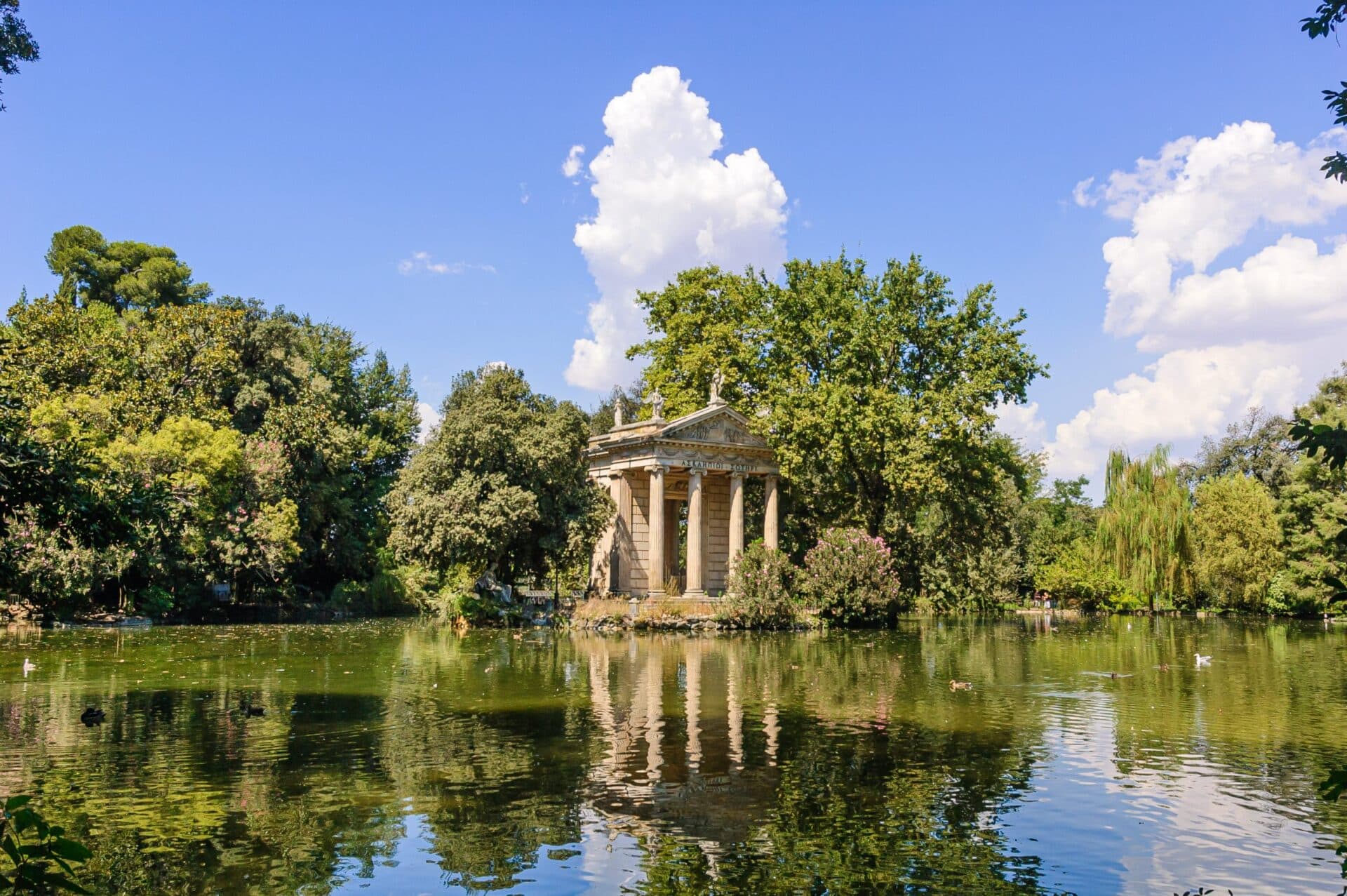
Villa Borghese Park: What to See for Free (Lake, Pincio, Zoo)
The Galleria Borghese needs a ticket. The 200 acres around it don't. Here's what to see in Villa Borghese park without paying a cent, and the one thing that costs extra.
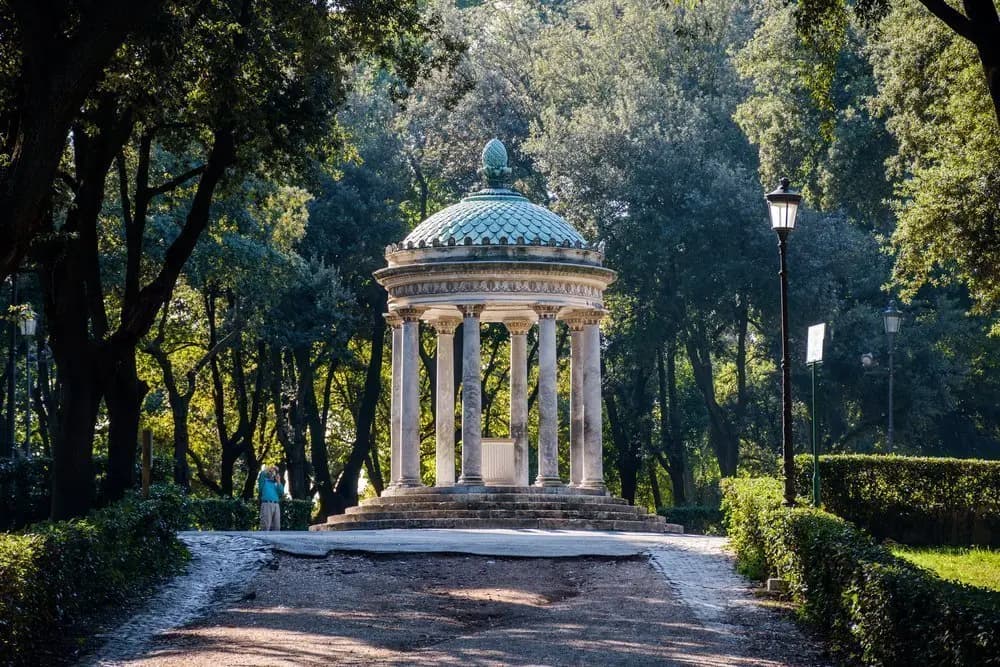
Villa Borghese with Kids: Places to Visit and Things to Do
Rome's biggest park has a zoo, a lake with rowboats, bike paths, and a puppet theater older than most Roman grandparents. Here's how to use it with kids in tow.