

10 Things to Do in Rome
Moses, a fake dome, a palace staircase duel, and the fountain everyone photographs wrong. Here's a route through Rome's center that actually makes sense.
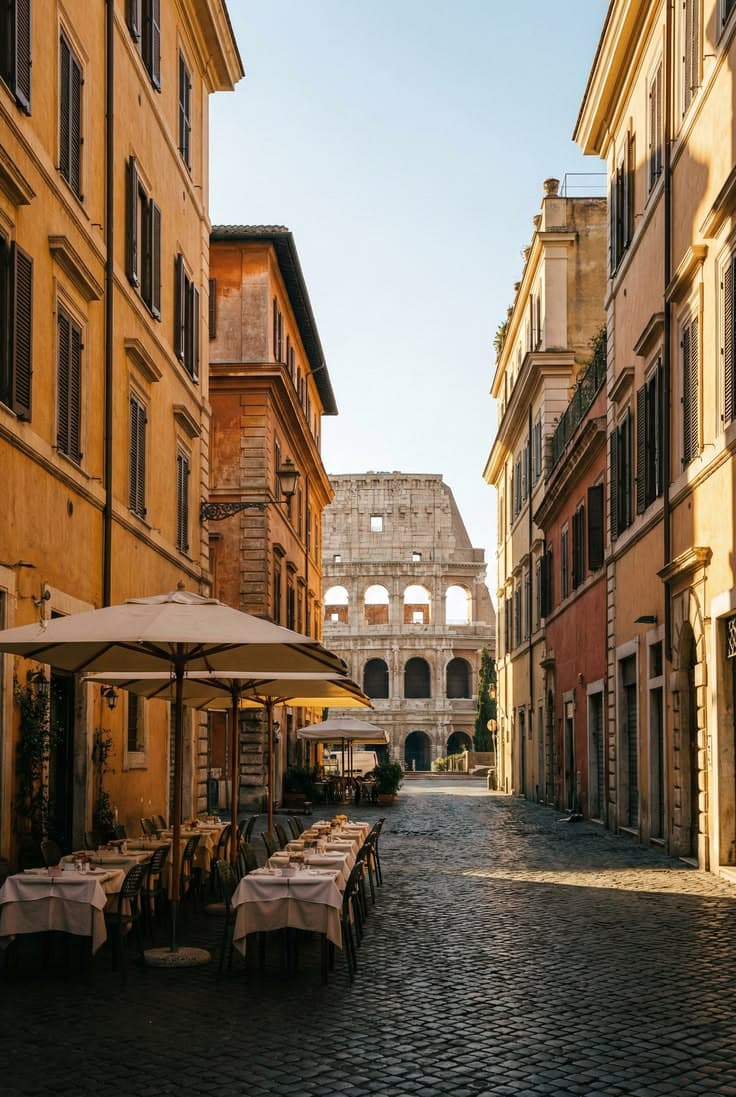
Rome doesn't hand you a tidy itinerary. Everything important is within a twenty minute walk of everything else, which means most visitors either wander in circles or stand in line for three hours to see one painting. Here are ten stops that work as a single route through the historic center, roughly from the Colosseum side down through Monti, over to the Trevi area, and back around to the Capitoline Hill. Do them in this order and you'll save your legs and your patience.
1. Church of San Pietro in Vincoli
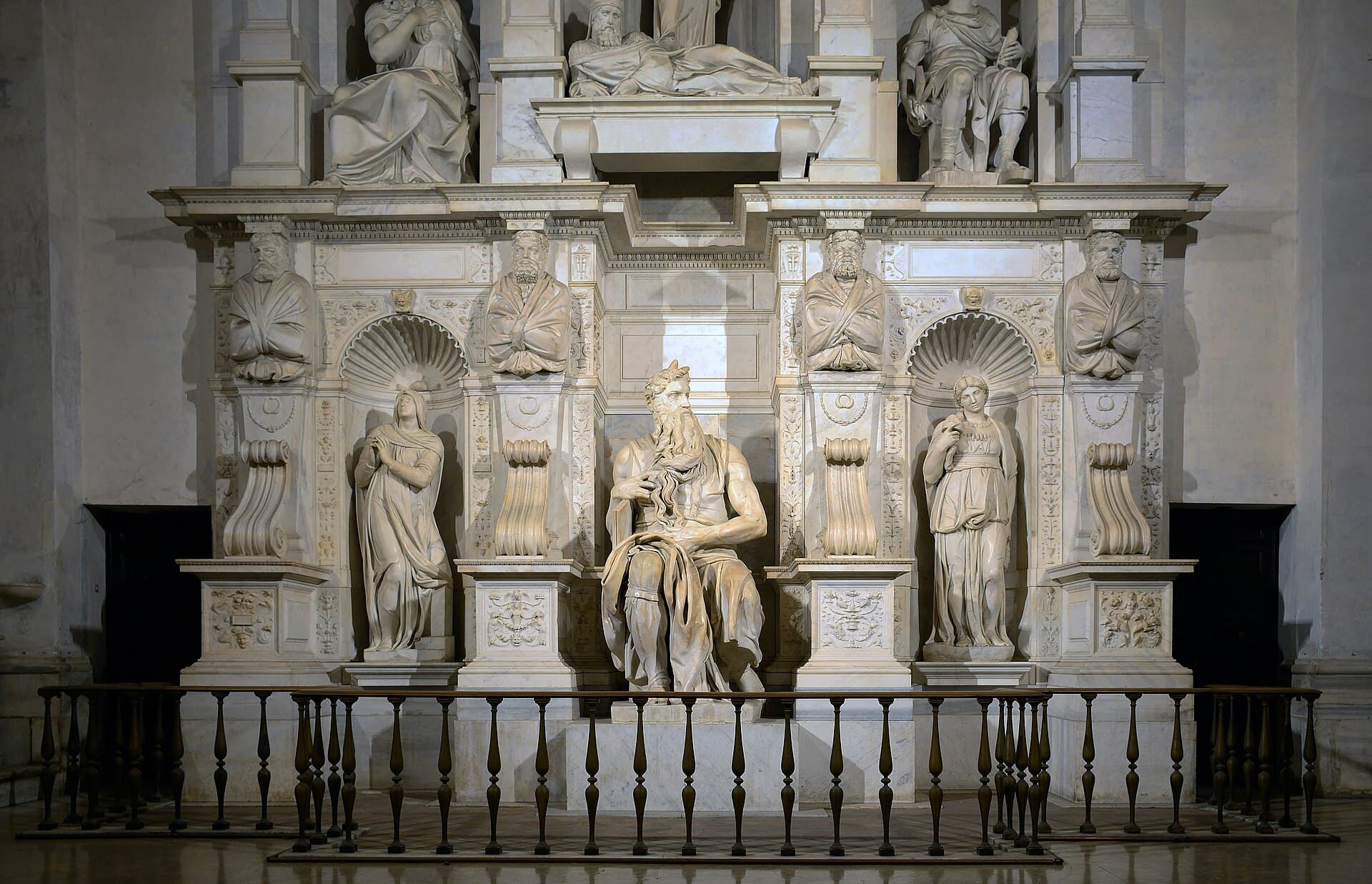
Start here, before the crowds figure out it's open. The church holds the chains supposedly used to shackle Saint Peter in Jerusalem, welded together in a reliquary under the altar, but almost nobody comes for the chains. They come for Michelangelo's Moses, carved for a tomb that Pope Julius II never got to use the way he planned. Look at the horns on his head. That's not artistic flair, it's a mistranslation of the Hebrew word for 'radiant' that stuck for centuries.
2. Camerette di Sant'Ignazio
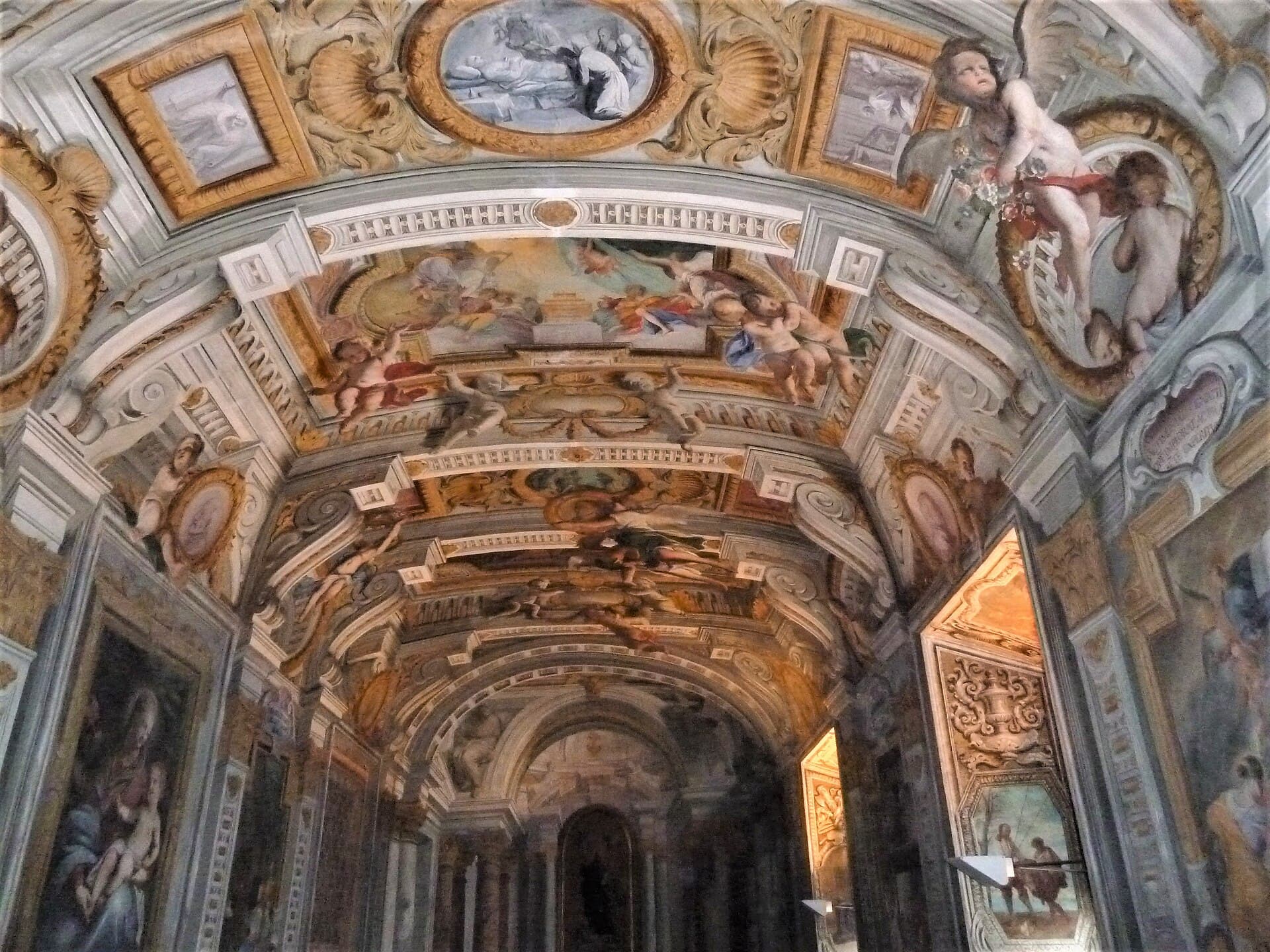
A ten minute walk gets you to the small rooms where Ignatius of Loyola lived and died, tucked beside the Church of the Gesù. Most tourists walk right past the entrance. Inside, Andrea Pozzo painted a corridor to look twice as long as it actually is, using forced perspective so convincing that people still reach out to touch a column that isn't there. It's free, it's quiet, and it takes fifteen minutes.
3. Monti neighborhood
Monti is Rome's oldest rione, and under the empire this was the Suburra, a slum packed between the Esquiline and Viminal hills where Julius Caesar reportedly grew up. None of that grit is left. Via del Boschetto and Via dei Serpenti are now lined with vintage shops, small wine bars, and people drinking spritz on church steps at 6pm. It's worth slowing down here rather than treating it as a hallway to the next landmark.
4. Palazzo Barberini
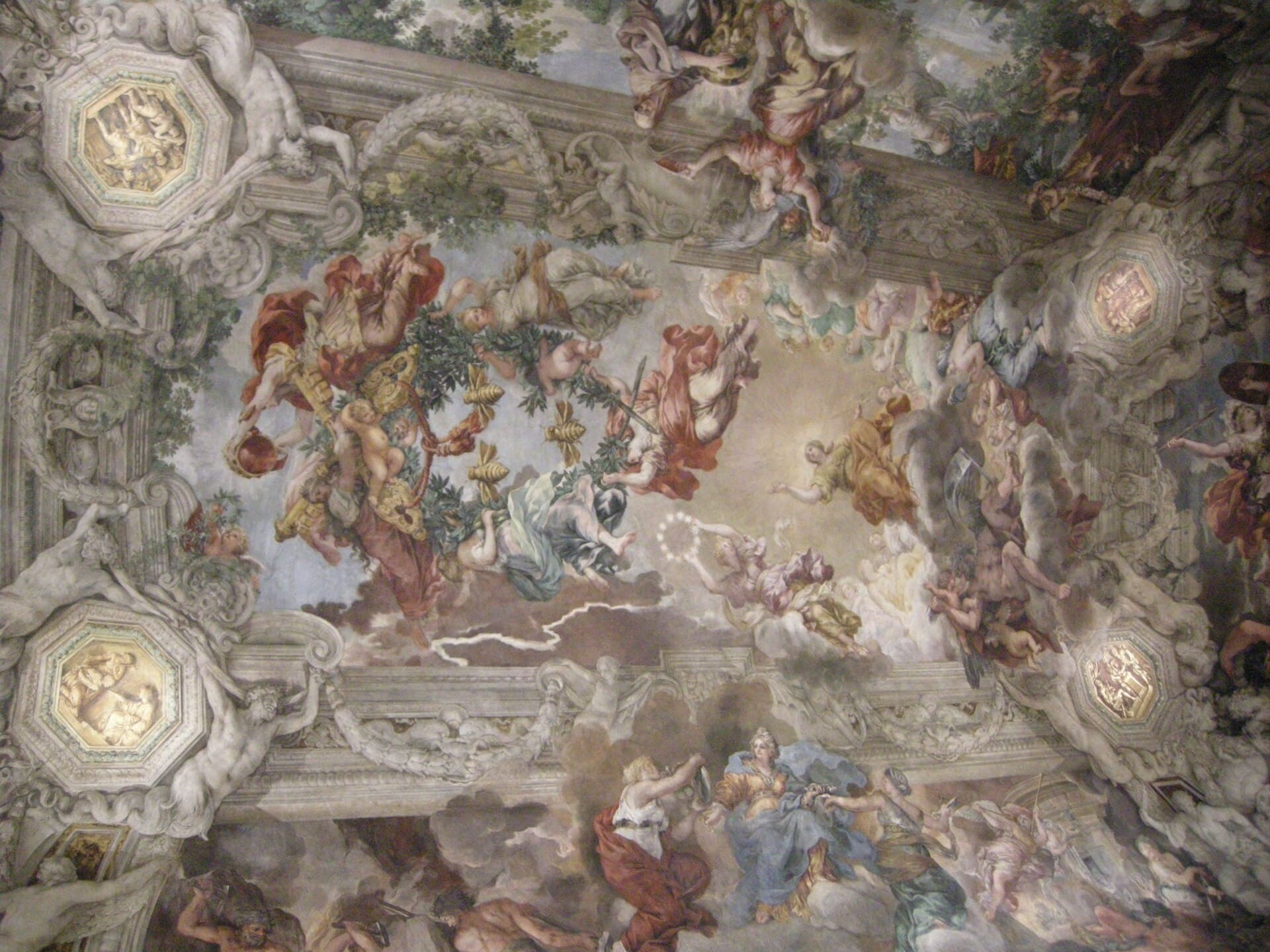
Pope Urban VIII built this palace for his family, and he hired two architects who hated each other to design it. Bernini and Borromini each built a staircase, one square and rational, one oval and twisting, and you can walk both and judge the feud yourself. Inside, Caravaggio's Judith Beheading Holofernes hangs with none of the sanitizing Rome usually applies to violence, and the ceiling fresco by Pietro da Cortona turns the main hall into a swirling political cartoon about papal power.
5. Terrazza Caffarelli
Skip the line for the Vittoriano's rooftop, which charges for an elevator ride to a view you can get for free here. Terrazza Caffarelli sits behind the Capitoline Museums and looks straight down over the Forum and the rooftops toward the Palatine. It's rarely crowded, there's no ticket required to stand at the railing, and it's a good spot to catch your breath before the next three stops.

6. Trevi Fountain
Nicola Salvi designed this in the 1700s to mark the endpoint of an aqueduct built by Augustus's general Agrippa in 19 BC, which is why the water still runs. Oceanus rides his shell chariot through travertine rock at the center, flanked by tritons wrestling seahorses. Tourists throw roughly three thousand euros into the basin every day, right hand over left shoulder, and the city collects it for Caritas to fund a supermarket for Rome's poor.
Show up before 8am. The square empties out overnight and you'll get photos of the fountain without fifty strangers in the frame, plus the morning light hits the marble better than the midday glare does.

7. Church of Sant'Ignazio di Loyola
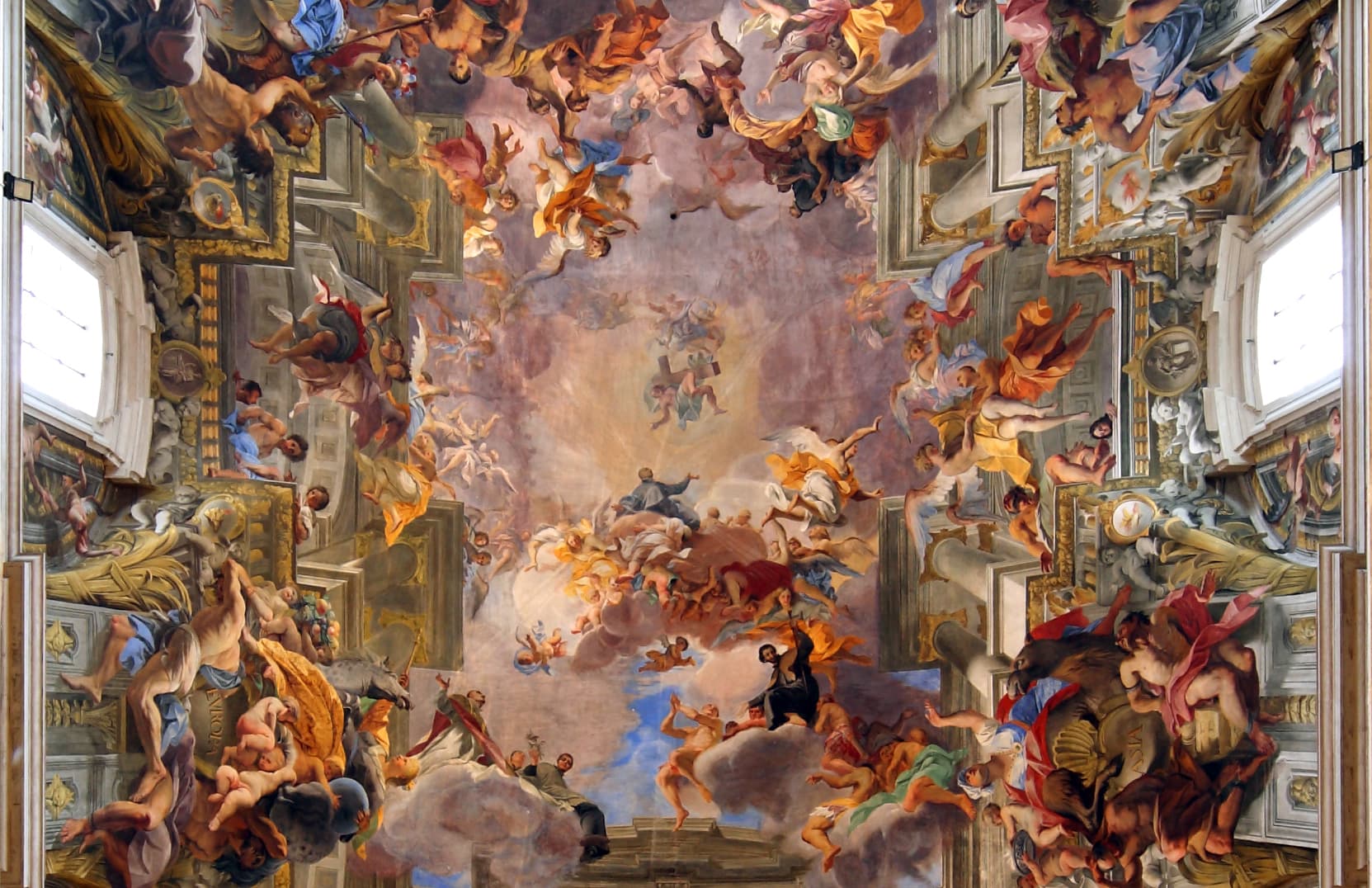
The Jesuits planned a dome for this church and ran out of money. Andrea Pozzo solved the problem by painting one instead, flat on canvas, so convincing from one marble disc on the floor that visitors still crane their necks trying to find the actual opening. Stand on the disc, look up, and the illusion holds. Step a few feet off it and the whole thing visibly buckles.
8. Roman Forum
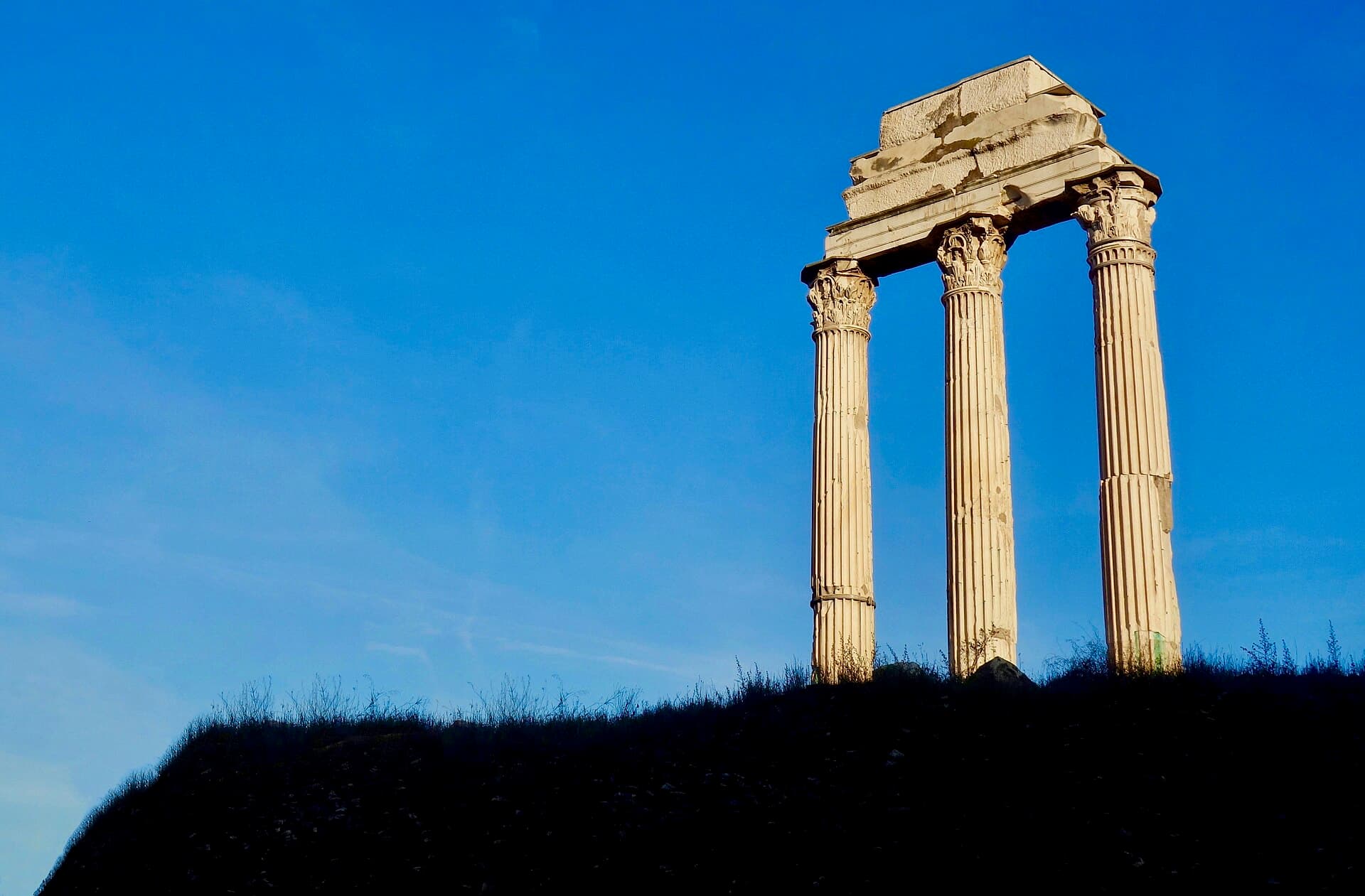
This was the actual seat of Roman government for over a thousand years, not a ruin built for photos. The Curia Julia still stands where the Senate met. The Temple of Caesar marks the spot where his body was cremated after the assassination, and people still leave flowers there. Walk the Via Sacra toward the Arch of Titus, which commemorates the sack of Jerusalem and still shows looted temple objects carved into its reliefs. Buy a combined ticket that includes the Colosseum and Palatine Hill so you're not paying three times to see one archaeological park.
9. Free walking tour with What About Tours
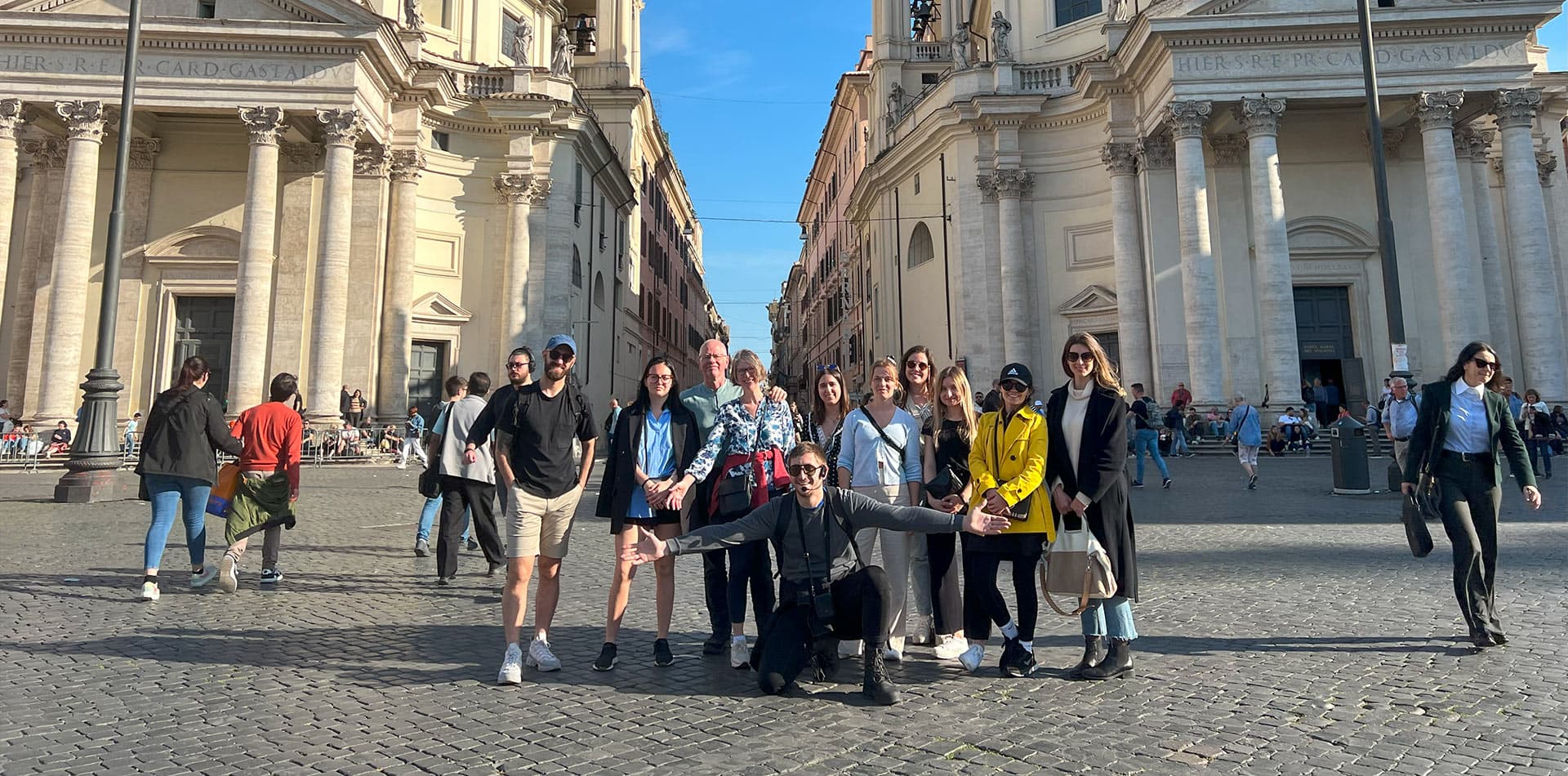
If you want someone to connect the dots between the Forum's politics, the Capitoline Hill's symbolism, and why half of ancient Rome's marble ended up inside Renaissance churches, this is the point to join one of our guides instead of reading plaques. Our free tours run on tips, cover this exact stretch of the center, and go into the stuff that doesn't fit on a sign, like which emperor's statue got its head swapped out for a later one and why nobody bothered to fix it.
10. Capitoline Museums
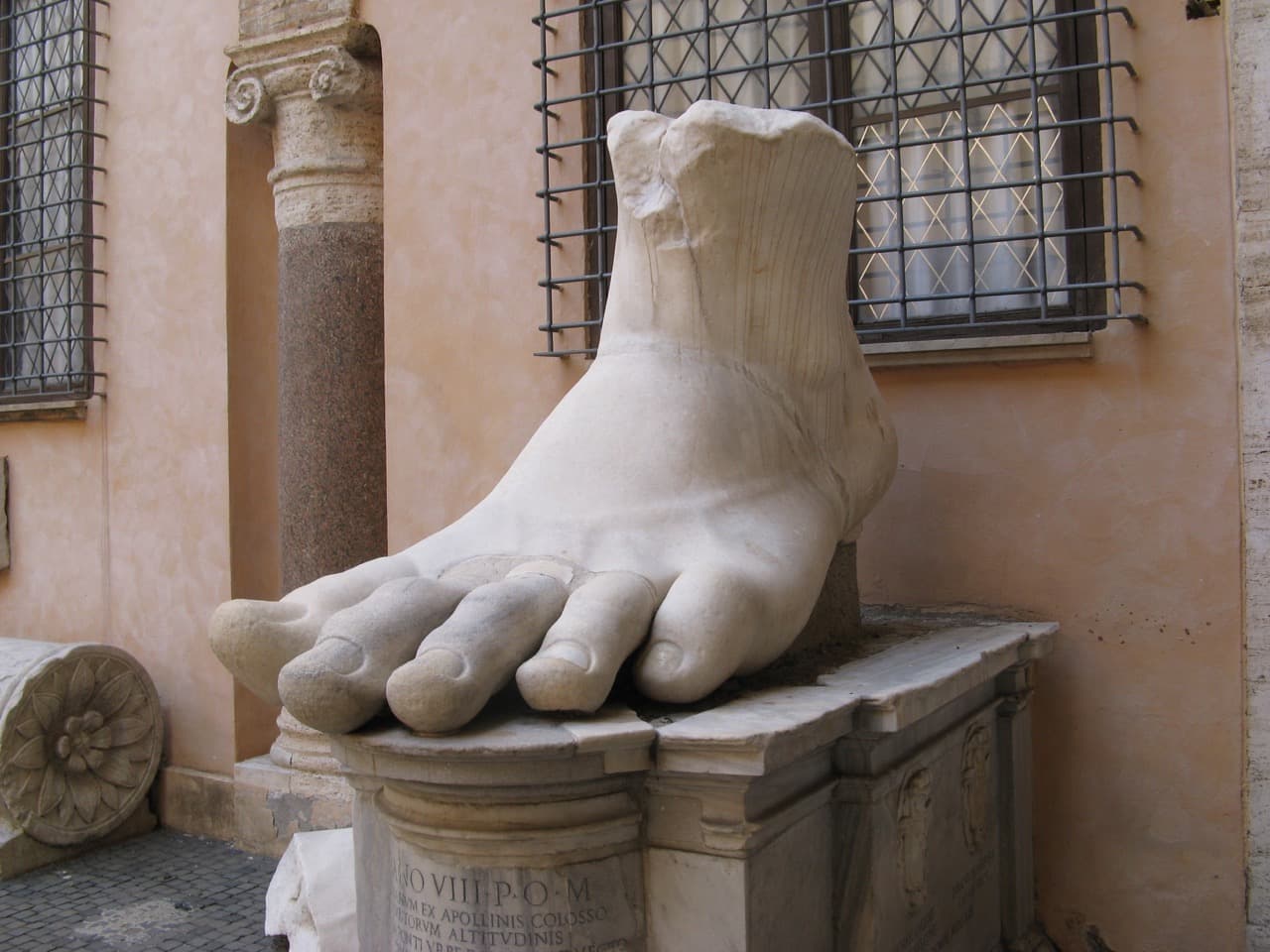
End on the Capitoline Hill, home to what's considered the oldest public museum in the world, founded in 1471 when Pope Sixtus IV donated a batch of bronze statues to the people of Rome. The bronze she-wolf nursing Romulus and Remus lives here, along with the equestrian statue of Marcus Aurelius that survived the Middle Ages only because everyone mistakenly thought it depicted Constantine, the first Christian emperor, instead of a pagan one. In the courtyard, massive fragments of the Colossus of Constantine, a head bigger than a person, a hand the size of a couch, sit scattered like a giant was disassembled mid stride.