


The Bridge of the Holy Angel: Rome's most theatrical crossing
Ponte Sant'Angelo has carried emperors, popes, and executioners for almost 1,900 years. Here's why it's worth stopping on, not just walking across.
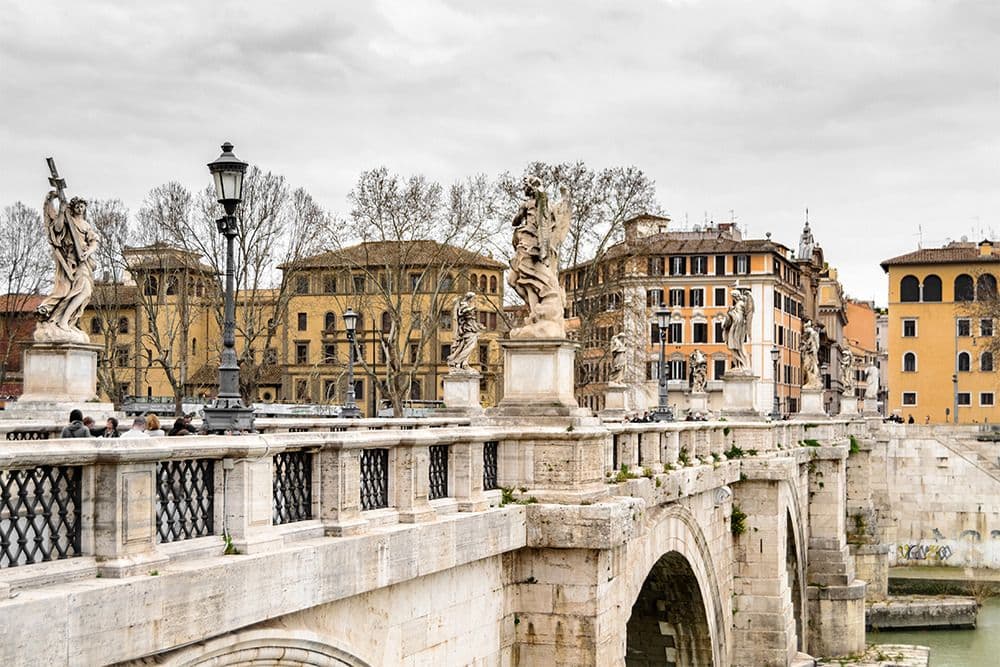
Most people cross Ponte Sant'Angelo on their way to somewhere else, usually St. Peter's, phone out, barely glancing at the ten statues lined up on either side. That's a mistake. This bridge has been standing since 134 AD, which makes it older than the Colosseum's final form, and it has quietly witnessed some of the strangest chapters in Roman history. Emperors used it to reach their tombs. Popes used it to escape assassins. The city used it to hang people and leave the bodies on display. None of that shows up on a postcard.
An emperor's private driveway
The bridge started life as the Pons Aelius, built by Hadrian to connect central Rome to his newly constructed mausoleum, the enormous drum-shaped tomb we now call Castel Sant'Angelo. Hadrian wasn't shy about self-promotion. He wanted a direct, dignified route from the city to his final resting place, and he got one. The bridge originally had three arches spanning the Tiber, and remarkably, the central arches are still the ones you walk over today, patched and reinforced but structurally the same stones Hadrian's engineers laid down.
For centuries the bridge just did its job: moving people between the city and the mausoleum. The real transformation, the one that gives the bridge its personality, didn't happen until the 1600s.
Bernini's angels, and the ones he didn't want you to see
In 1669, Pope Clement IX commissioned Gian Lorenzo Bernini to redesign the bridge as a kind of open air gallery leading pilgrims toward St. Peter's. Bernini and his workshop carved ten angels, each holding an instrument of Christ's Passion: the crown of thorns, the nails, the sponge soaked in vinegar, the lance. Walking across, you're meant to move through the Passion step by step before arriving at the Vatican, which is a fairly aggressive piece of religious stagecraft when you think about it. This was propaganda in marble, aimed at every traveler who needed reminding who was in charge of the road to salvation.
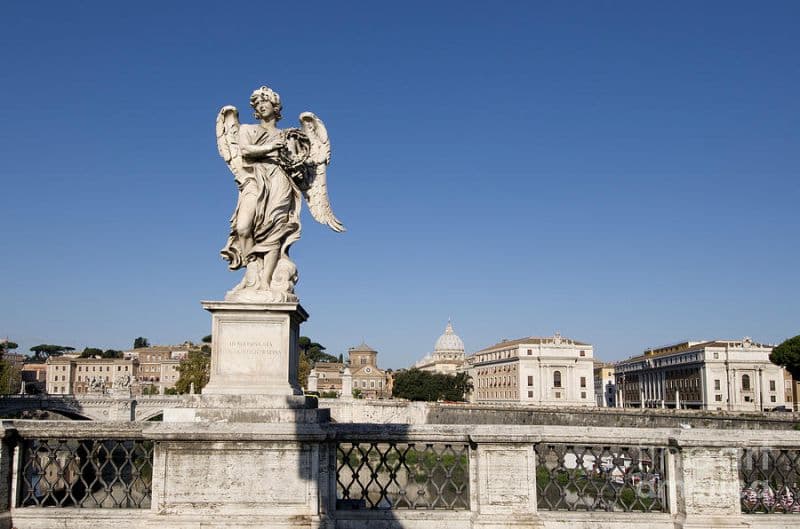
Here's the twist: two of the originals, the Angel with the Crown of Thorns and the Angel with the Superscription, were carved personally by Bernini, and Clement IX reportedly thought they were too good to leave outside exposed to weather and pigeons. He had copies made for the bridge and kept the originals inside the church of Sant'Andrea delle Fratte, a few blocks away, where they still stand today. So the angels on the bridge right now are largely the work of Bernini's students, following his designs. If you want the real Bernini hand, you have to go find the church.
If you want to compare, walk to Sant'Andrea delle Fratte after visiting the bridge. Seeing Bernini's two original angels next to the workshop copies is the fastest way to actually understand what made him different from everyone else carving marble in Rome.
A bridge with a body count
Before it was a pilgrim's promenade, Ponte Sant'Angelo had a darker civic function. For centuries it was Rome's preferred spot for public executions, and not the quiet kind. Heads and bodies were displayed here after beheadings, a warning to anyone crossing into the city. The most famous case is Beatrice Cenci, executed in 1599 for killing her abusive father, whose death on this bridge turned her into a folk symbol of resistance against a corrupt, unaccountable justice system. Shelley wrote a play about her. Romans still tell her story. The bridge that carries tourists toward Vatican gift shops today is the same one where crowds once gathered to watch the state make an example of someone.
Why the bridge connects to a fortress at all
On the far end sits Castel Sant'Angelo, Hadrian's mausoleum turned papal fortress, prison, and escape hatch. When Rome was sacked in 1527, Pope Clement VII ran from the Vatican to the castle through the Passetto di Borgo, a raised secret corridor still visible along the wall. The bridge was the last visible link in that chain of survival, the final stretch a pope would cross, or in that case dash across, between the palace and the fortress. Knowing that changes how the whole crossing reads. It's not decoration, it's infrastructure for power that occasionally needed to run for its life.
Seeing it properly
Go early morning or right before sunset if you can. Midday brings selfie sticks and tour groups moving fast toward the Vatican, and you'll miss the details on the statues entirely. Stand on the bridge itself and look back at Castel Sant'Angelo with the Tiber curving underneath. That view alone explains why Hadrian picked this spot two thousand years ago. Then walk the length slowly and actually read the objects each angel is holding. It takes five extra minutes and it's the difference between a photo op and understanding what you're looking at.
Our guides walk this route as part of the Castel Sant'Angelo experience, connecting the bridge's Roman origins to the fortress's later life as a papal hideout and prison. If you'd rather skip the crowds at the ticket line and get the context in person, that's exactly what our small group tour is built for.
Related Articles
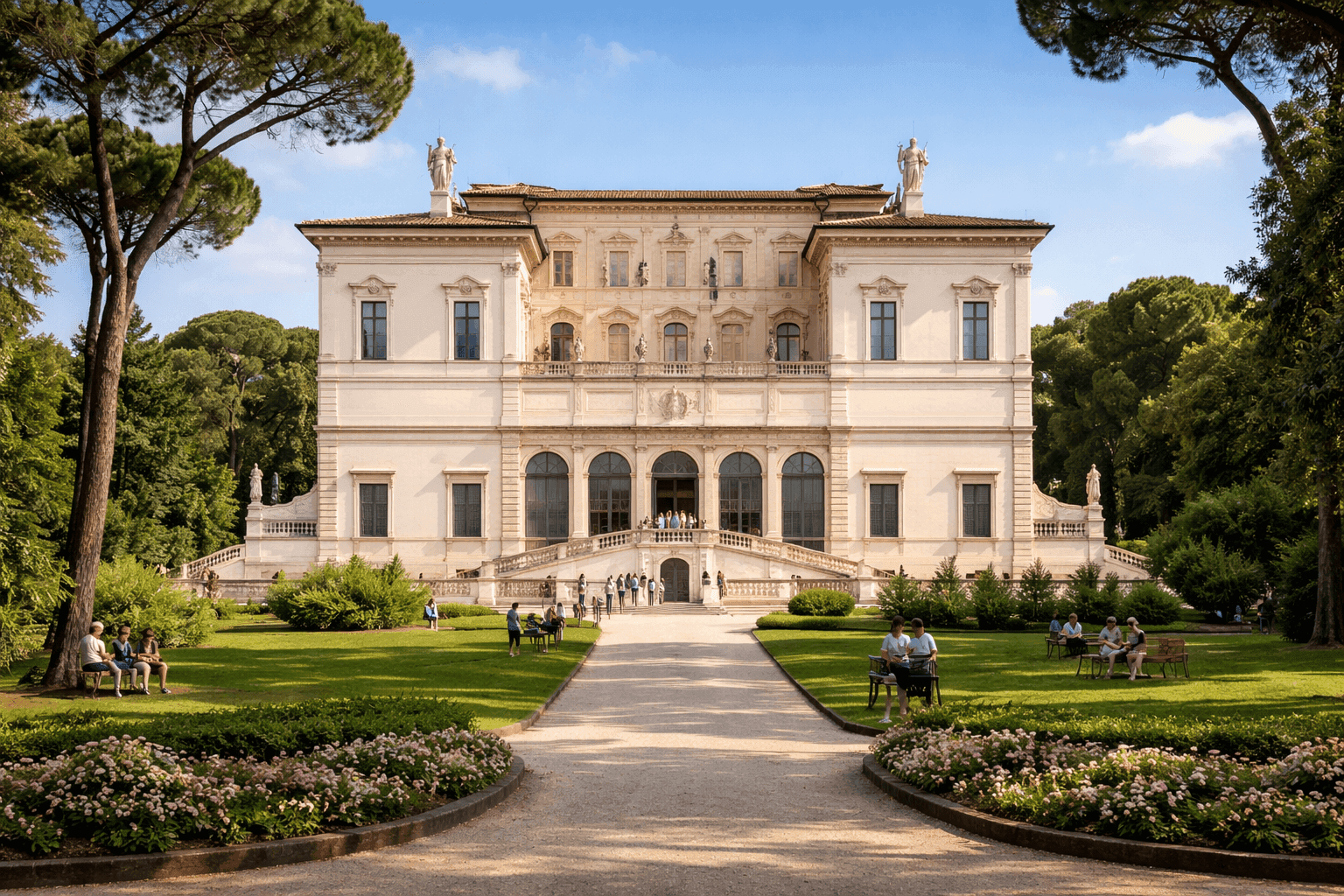
The History of Villa Borghese: From Cardinal Scipione to Now
How a cardinal's private pleasure garden, built on stolen art and papal money, became Rome's biggest public park.
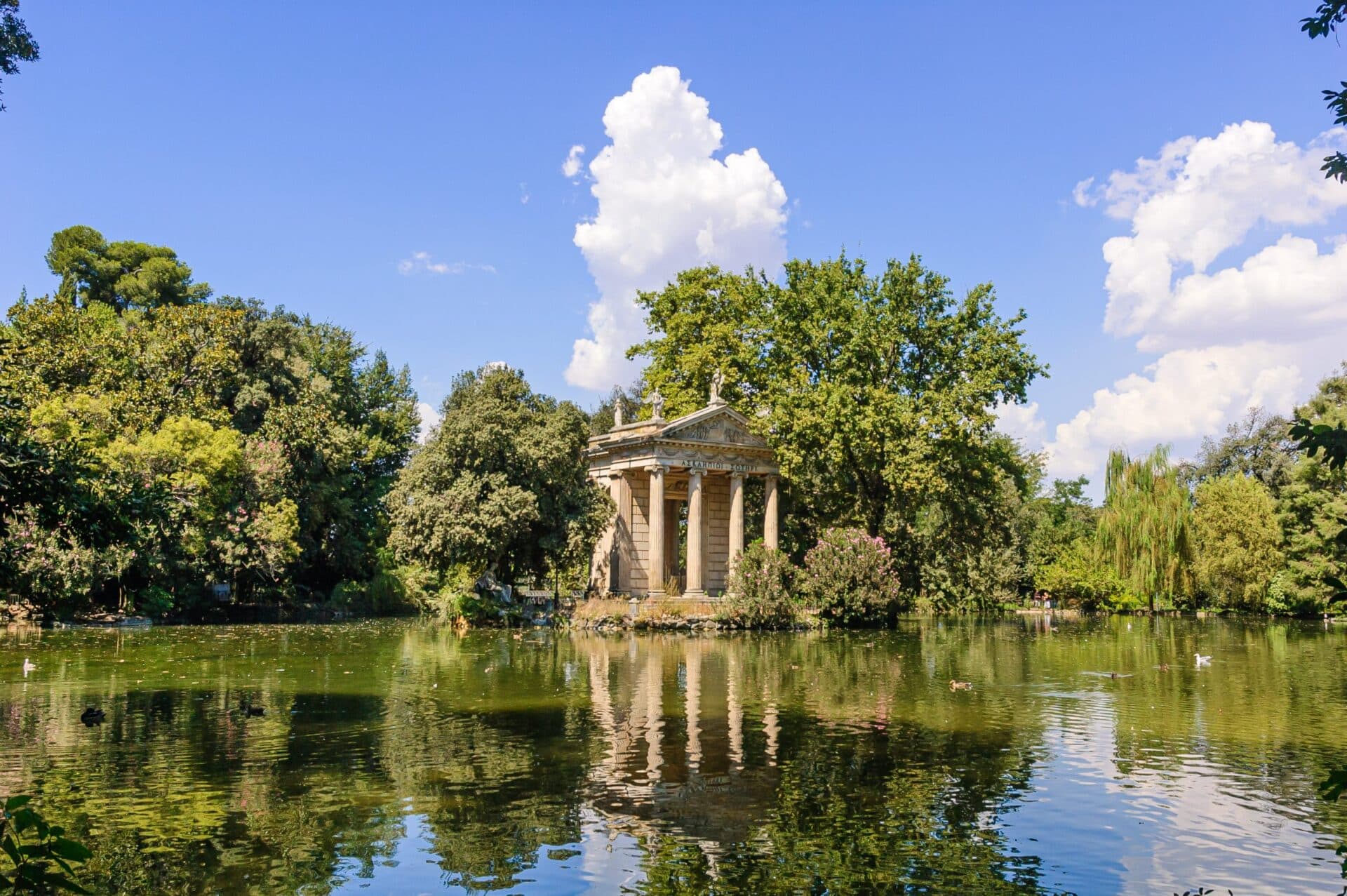
Villa Borghese Park: What to See for Free (Lake, Pincio, Zoo)
The Galleria Borghese needs a ticket. The 200 acres around it don't. Here's what to see in Villa Borghese park without paying a cent, and the one thing that costs extra.
Villa Borghese with Kids: Places to Visit and Things to Do
Rome's biggest park has a zoo, a lake with rowboats, bike paths, and a puppet theater older than most Roman grandparents. Here's how to use it with kids in tow.