


The History of Villa Borghese: From Cardinal Scipione to Now
How a cardinal's private pleasure garden, built on stolen art and papal money, became Rome's biggest public park.
Most people wander into Villa Borghese for the shade, the rowboats, or the view from the Pincio terrace. Few stop to ask why a cardinal needed three hundred acres of gardens on the edge of Rome, or how his private art stash ended up as one of the best small museums in Europe. The answer involves nepotism, looted paintings, and a family that knew exactly how to spend other people's money.
A cardinal with a nephew's advantage
Scipione Borghese became a cardinal in 1605 at 29, not because of any particular theological gift but because his uncle had just been elected Pope Paul V. This was standard practice at the time. Popes appointed relatives to powerful positions, and those relatives used the access to build fortunes fast, since a papacy rarely lasted long enough to enjoy at leisure. Scipione understood the deal immediately. He used his position to collect art, land, and taxes on Rome's grain trade, and he funneled a huge amount of that wealth into building a villa suburbana, a countryside retreat that was technically outside the city walls but only just, close enough for a cardinal to slip away from Vatican politics for an afternoon.
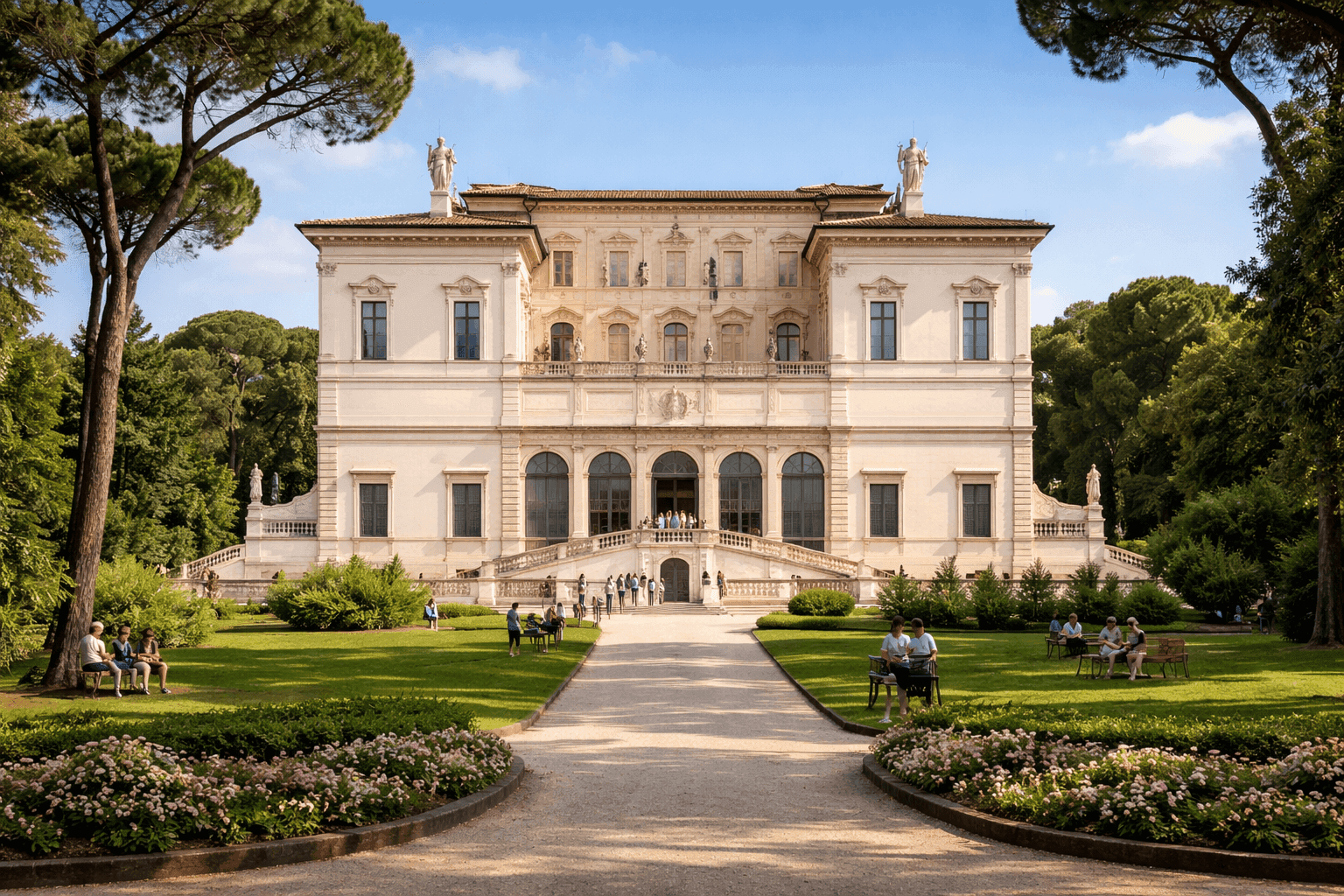
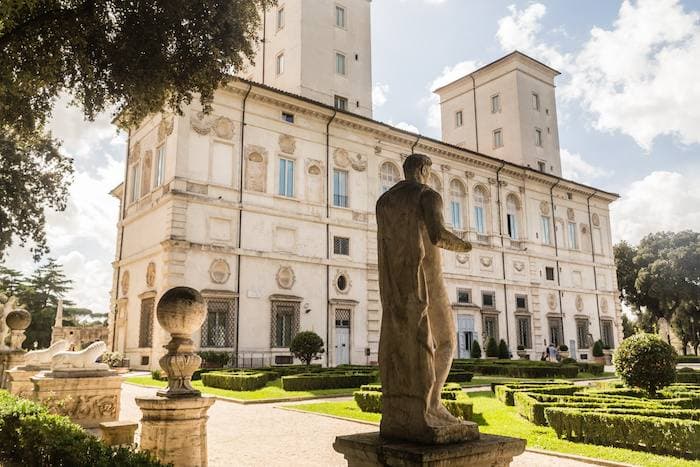
Construction on the Casino Borghese, the building we now call the Galleria Borghese, started in 1613 under the architect Flaminio Ponzio, and continued after his death under Giovanni Vasanzio. It wasn't finished until the early 1620s. The surrounding gardens grew alongside it, laid out with fountains, aviaries, a small zoo, and enough sculpture to make the place feel less like a park and more like an open air gallery.
How Scipione got his art, and it wasn't always polite
Scipione's collection is the reason the villa matters today, and some of how he assembled it should embarrass the Church more than it does. He commissioned Bernini directly, which is the clean part of the story. The messier part involves Giuseppe Cesari, a painter Scipione had arrested on a technicality so he could seize his paintings as compensation. It also involves the Raphael and the Caravaggios that landed in his hands through pressure, debt, and the simple fact that cardinals didn't need to negotiate fairly. Caravaggio in particular owed Scipione his freedom more than once. The cardinal used his influence to get the painter out of legal trouble, and Caravaggio paid him back in canvases, several of which now hang in the Galleria.
Bernini's sculptures are the real draw for most visitors now. Apollo and Daphne, the Rape of Proserpina, David with the Slingshot: all made for Scipione, all still in the room they were designed for. Bernini was in his twenties when he carved some of these. Standing in front of Daphne's fingers turning into laurel leaves, marble somehow rendered soft, it's hard to overstate how far ahead of everyone else he was.
The Galleria Borghese limits entry to timed two hour slots and sells out days in advance in high season. If seeing the Bernini and Caravaggio rooms matters to you, book the museum ticket before you plan the rest of your day around it.
Three centuries as a private playground
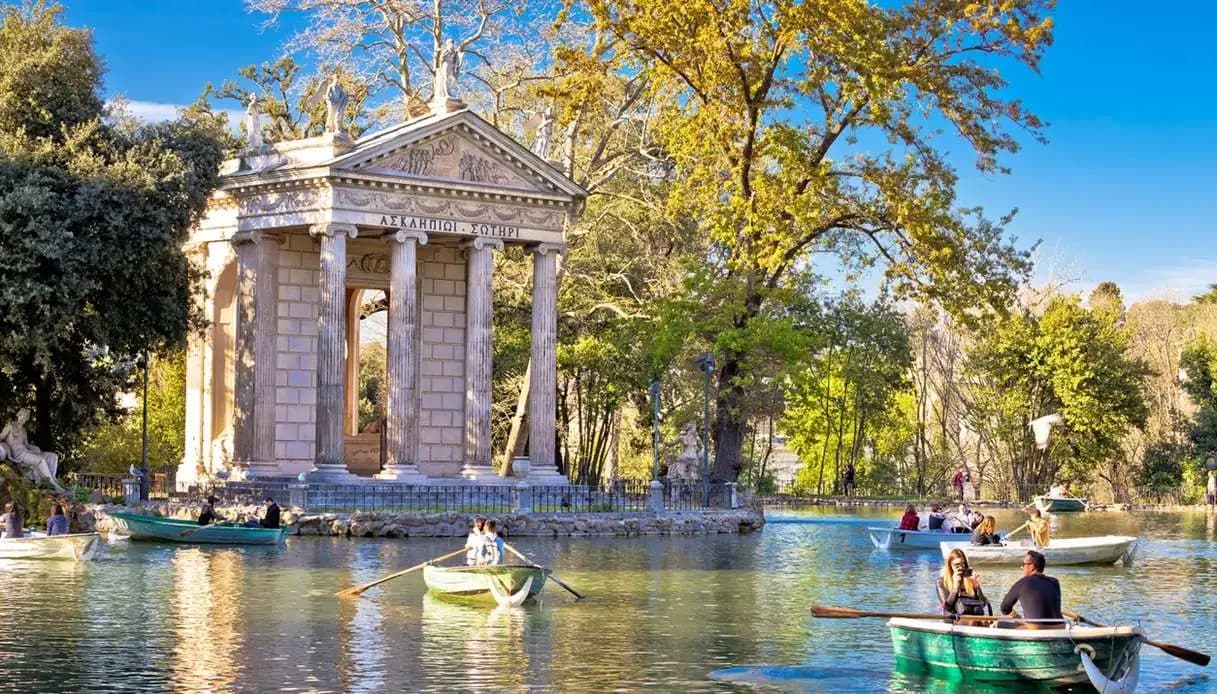
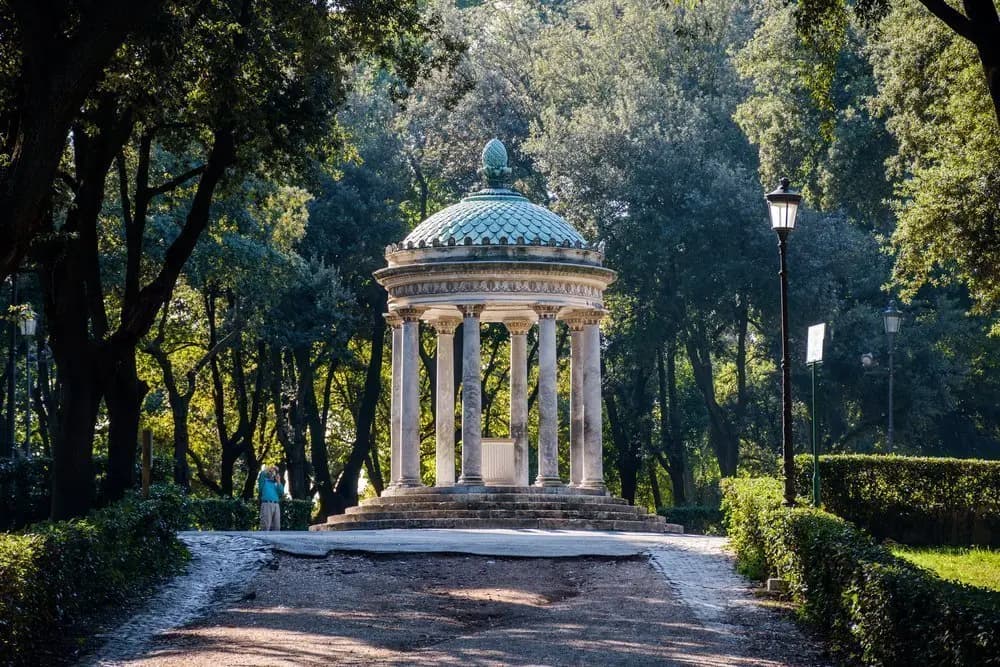
For most of its history, Villa Borghese stayed exactly what it was built to be: a private estate for one family. Later Borghese heirs expanded the gardens through the 1700s and 1800s, adding the lake, the Temple of Aesculapius, and more open lawns in the English romantic style that was fashionable by then. Napoleon's brother in law, Camillo Borghese, married Napoleon's sister Pauline and, under pressure from his new relatives, sold off a huge chunk of the ancient sculpture collection to the Louvre in 1807. That's a big reason why some of Rome's best classical marble now lives in Paris.
1901: the sale that made it public
By the end of the 1800s, the Borghese family's finances had gone the way of a lot of old Roman aristocracy: too much land, not enough income, and death duties piling up. In 1901, the Italian state bought the villa and its grounds from the family for 3.6 million lire. It opened to the public not long after, and Rome finally got the green space it had never really had inside its walls. The art collection took a separate legal fight. Because some of the paintings and sculptures had been mixed into the sale of the villa itself, the state ended up acquiring the Galleria's holdings too, which is the only reason Bernini's sculptures are still viewable in the rooms he designed them for instead of scattered across museums in three countries.
What's there now
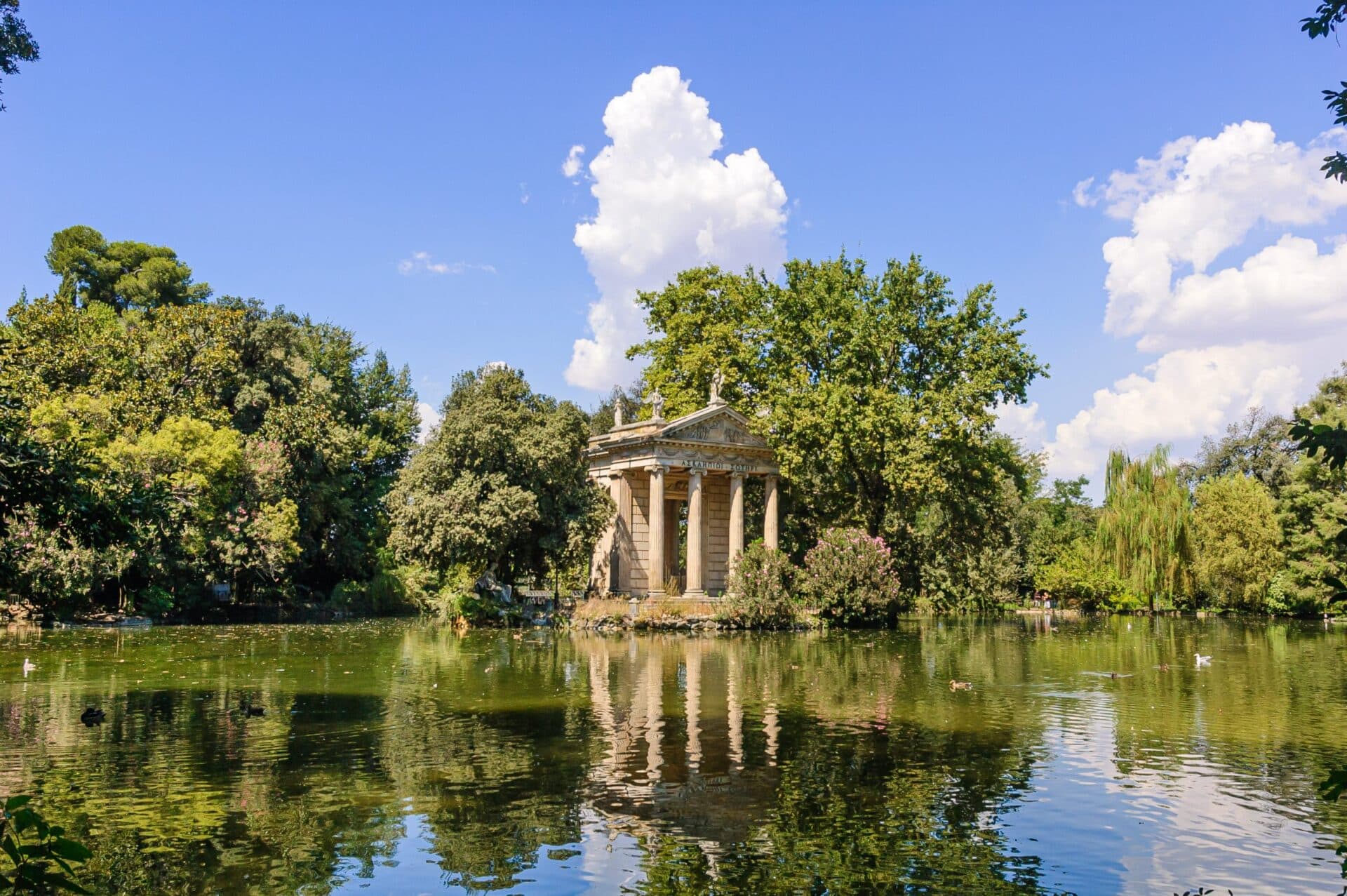
Today the park covers about 80 hectares and functions as Rome's answer to Central Park, minus the grid layout. You'll find the Bioparco zoo, the Pincio terrace with its view over Piazza del Popolo, the Piazza di Siena horse arena, a lake with rentable rowboats shaped vaguely like swans, and the Galleria itself sitting in the middle of it like the point everyone eventually circles back to. The Museo Carlo Bilotti and the Casina di Raffaello, a children's museum, sit on the grounds too, but the Galleria is the reason to come, and the park is the reason to stay.
What makes the place work, honestly, is the contradiction. A cardinal who shouldn't have had this much money built a monument to his own taste, using art he sometimes didn't earn fairly, and three hundred years later it became the most democratic square mile in Rome. Every Sunday, families picnic on lawns that used to be off limits to anyone without a title.
If you only have time for one stop inside the park, make it the Galleria, and go early. The light in those rooms changes everything, and by mid afternoon the crowds make it hard to stand in front of Apollo and Daphne for more than a few seconds without someone's elbow in your ribs.
Related Articles
Villa Borghese Park: What to See for Free (Lake, Pincio, Zoo)
The Galleria Borghese needs a ticket. The 200 acres around it don't. Here's what to see in Villa Borghese park without paying a cent, and the one thing that costs extra.
Villa Borghese with Kids: Places to Visit and Things to Do
Rome's biggest park has a zoo, a lake with rowboats, bike paths, and a puppet theater older than most Roman grandparents. Here's how to use it with kids in tow.
The Bridge of the Holy Angel: Rome's most theatrical crossing
Ponte Sant'Angelo has carried emperors, popes, and executioners for almost 1,900 years. Here's why it's worth stopping on, not just walking across.